Posts

July 23, 2011
The EeePc 1015PN, at least the European version, comes with these two video cards:
- 00:02.0 VGA compatible controller: Intel Corporation N10 Family Integrated Graphics Controller (rev 02)
- 04:00.0 VGA compatible controller: nVidia Corporation GT218 [ION] (rev ff)
The first one is a nice Intel integrated card that allows you to have good performance in the 99.9% of the typical netbook user-cases.
In the other hand, the Nvidia ION is way more powerful than the integrated Intel card.
ION is capable of running HD videos, full-screen Youtube HD videos, games, and much more.
The downside of the nVidia card is the power drain.
This version of ION does drain 600mA more than the Intel integrated card.
These 600mA, as you can imagine, need also to be dissipated, forcing the vent to spin at its maximum speed.
Even with the vent at the maximum speed, the temperature increases from the 4055°C (idle with ION deactivated) to 65~80° (idle with ION active).
Therefore I’ve created a script that keeps ION deactivated by default and allows the user to active it when is needed and stop it when is no more needed.
Read More 
May 22, 2011 - Settala, IT
Last weekend, the ViGLug organized an event in Settala called Brain Jumble.
The idea of this three-day event was to have a set of conferences on Linux in Business on Friday, Linux in the Public Sector on Saturday, and Linux in the Instruction Sector on Sunday.
The event has been a success, with more than 15 speeches and many people participating in it.
During those talks, many topics got covered, from Linux to Qt, to Open Street Map.
There have also been talks on democracy and Open Source.
Read More 
February 4, 2011
On the first of February, APNIC, the Asia Pacific Network Information Centre, announced that the last two IPv4 class A (/8) have been assigned.
With this assignment, there are no more IPV4 classes /8 available from IANA.
This does not mean that there are no IPv4 available, but that from now on, only smaller classes will be assignable.
Also, the RIR still has some /8 classes available.
Many people see this as a clear sign that the move to IPv6 is imminent.
I do not share this optimism.
For many years companies will continue freeing IPv4 classes by implementing NATs and will sell those classes to newer companies that will require IPv4s.
Over time the average price per address will increase, squeezing out of the market the small players.
We will see a move to IPv6 at a certain point, but I doubt it will happen before 10 or 20 years.
Read More 
July 5, 2010
Two days ago, with an email to the Python Announce mailing list, Benjamin Peterson announced the release of Python 2.7.
This moment is of historical importance for the Python project since 2.7 will be the latest major 2.x release.
From now on, only the Python 3.x branch will have additional development.
To ease this change, Python 2.7 will get full support for five years.
The changes between 2.7 and 3 are easy to apply for the majority of codebases, but I suspect that many projects will not make the deadline.
The main reason for my skepticism is that open-source projects have a horrible track record for those changes.
The main reason this happens is that many libraries, used usually by many other projects, are unmaintained or so lightly maintained that such an effort will be hardly doable.
Also, until the libraries get ported, there is no way the applications or other libraries that depend on them will be ported.
Read More 
June 18, 2010
Back in the 80s, SCO was one of the first companies to sell a UNIX operating system.
The history of SCO is a complex one, with many acquisitions, merges, and renames.
But, long story short, they affirmed to be the rightful owner of many aspects of UNIX.
SCO leveraged this supposed ownership and sued many companies such as AutoZone, DaimlerChrysler, IBM, and Novell to obtain royalties.
The importance of those litigations is given by the fact that if it is true that SCO is the owner of UNIX, this will imply that they are also the owner of Linux or at least some parts of it.
The fact that such a litigious company like SCO would be the owner of Linux would be a nightmare with a substantial impact on open source companies and communities to the point that Linux’s future would be in danger.
Read More 
July 26, 2009
In a historical twist, now Microsoft contributes to Linux Kernel.
This fact can seem absurd, but Microsoft sent a 22k lines patch to better support Linux on Microsoft’s Hyper-V last week.
On the one hand, we have to remember that Steve Balmer, Microsoft CEO, back in 2001 affirmed compared Linux and Open Source to cancer.
On the other hand, it does make sense for Microsoft to ensure that Linux properly runs on Hyper-V, and there is no better way to do so than to commit the code themselves.
Also, Microsoft has entered into a deal with Novell for many millions of dollars around Linux and Windows interoperability in 2006.
Read More 
January 20, 2009
Last week, Sebastian Nyström (Vice President of Qt Software) announced that Qt would have one additional license from the next release: the LGPL.
This is a huge change from the previous Qt licensing policy and a good step in the path that Qt started many years ago.
We shall not forget that until 2000, Qt was released in a double Commercial/QPL license, and while the QPL name is Qt Public License, it was not considered Free Software by the Free Software Foundation.
In 2000, they added the GPL license to the mix, which solved all issues for the open-source community but still forced the non-open-source customer to buy from Qt Software.
Read More 
September 28, 2008
Last week, Google unveiled Android 1.0.
The first device that will feature this OS is going to be HTC Dream.
The Android platform is Google’s reply to Apple’s iOS.
Or, at least, this is my read on the matter and the meaning I’m giving it in this article.
The main difference between Android and iOS is that Android will allow multiple companies to create competing Android devices.
On the one hand, this will create more options for the consumers; on the other hand, it will create a less coherent experience.
Read More 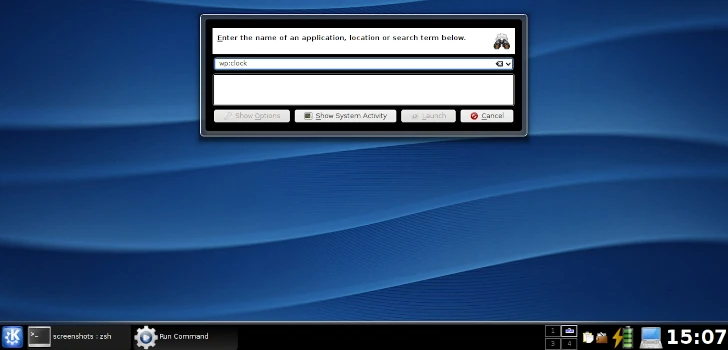
May 14, 2008 - Sebastopol, CA, US
I’ve already talked about the NBLUG in a previous blog post.
Yesterday night I presented at NBLUG an Introduction to KDE4.
In the talk, I’ve shown KDE4 features as well as look and feel.
New features that will land in 4.1 also were discussed.
After the talk, the people in the audience did ask some questions.
I appreciated the interest of the present people in the new updates in the KDE and desktop space.
Read More 
September 12, 2007 - Sebastopol, CA, US
Yesterday evening I went to the NBLUG for the first time.
Actually, this is the first time I have gone to a Linux User Group event at all.
The evening started with a presentation by Kyle Rankin on how DNS works.
The presentation was very interesting because we use DNS so frequently in our lives, but it “just works” for most people, and they have no idea how and why it works.
I think tech people must understand how those base technologies work since, a lot of time, an issue can be pinned to something at an underlying level.
In my experience, all abstractions in information technology are leaky abstractions.
Therefore it’s critical to understand the whole stack to understand behaviors at a certain stack level.
Read More  (Fabio Alessandro Locati|Fale)'s blog